
I’ve always dreamed of attending a Hindu wedding. Not in the “bucket list” kind of way, but in the wide-eyed, Bollywood-watching, puja-reciting, childlike wonder sort of way. Hinduism has always fascinated me—majestic, layered, and spiritually magnetic. I’ve felt so close to it, like a language I almost spoke in another life. Growing up, I memorized the rituals from films, the chants, the flames, the colors. I was especially entranced by the saat phere—the seven sacred circles around the fire. That one cinematic moment felt like pure magic, and I longed to witness it in real life.
So, when Rehan’s college friend, the stunning and graceful Archana, messaged me out of the blue with: “Hey! What’s your email?”—I already knew what it meant.
I was invited.
To the wedding.
Cue: internal screaming.
Archana and her fiancé Shyam had been engaged for a while, and just the idea of being part of their wedding celebrations had me so giddy, I basically packed three months in advance. No joke. I bought bindis on Amazon like it was my job. I chose to wear a lehenga and sari instead of a shalwar kameez, and spent hours practicing sari draping with my mom in our living room. I even started watching documentaries on Hindu wedding customs. I was READY. Or at least I thought I was…
Fast-forward to Arizona:
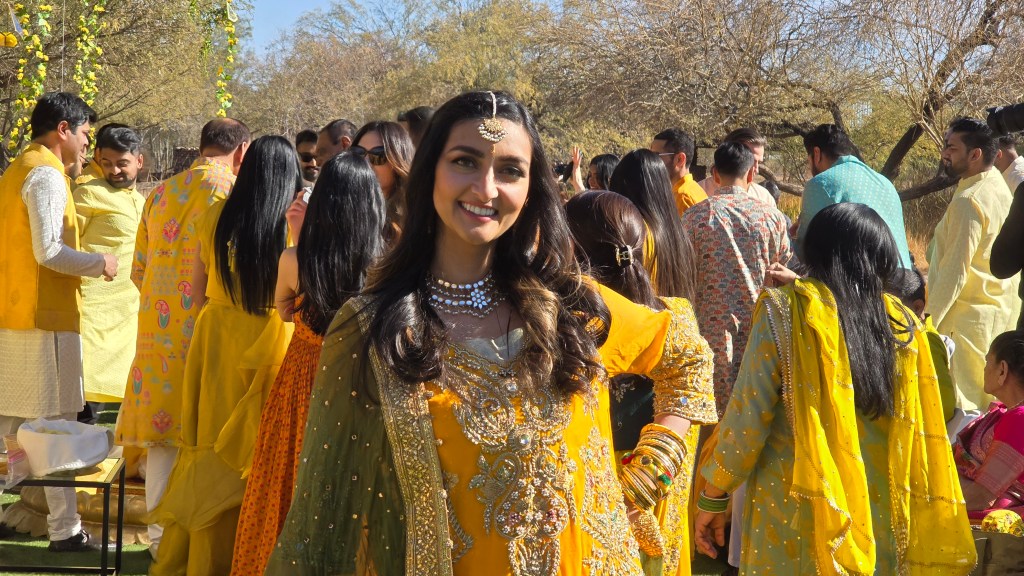
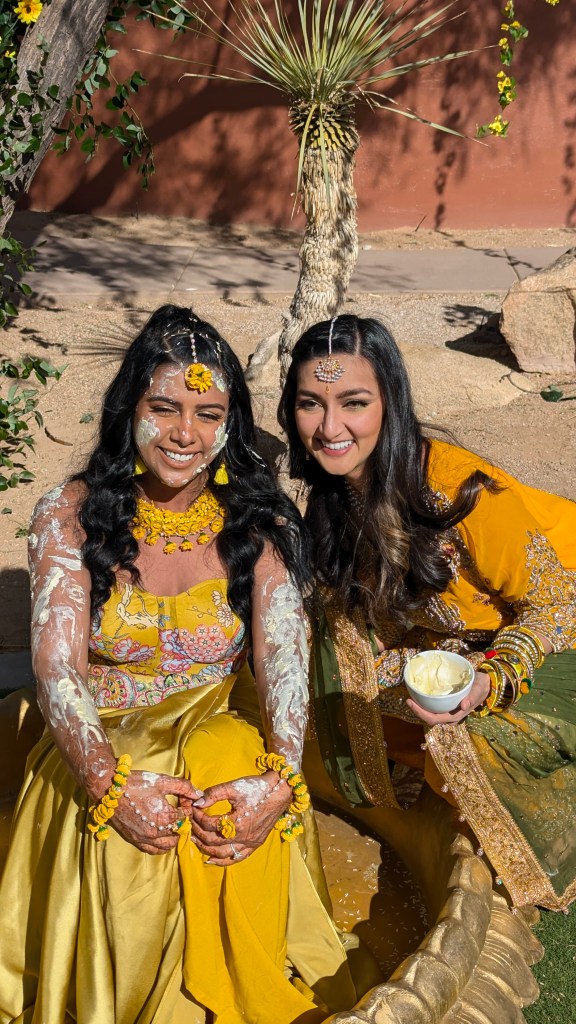
We arrived early for the haldi ceremony, and the minute I saw the golden paste being prepared, I squealed. A real-life haldi! Though familiar from Muslim Indian and Pakistani weddings, this one had its own unique flair. The couple sat on what looked like an adorable “lily pad” stage—was it symbolic? Was it just for the aesthetic? Either way, I was glued to the scene.
And then chaos. Glorious, turmeric-flying chaos.
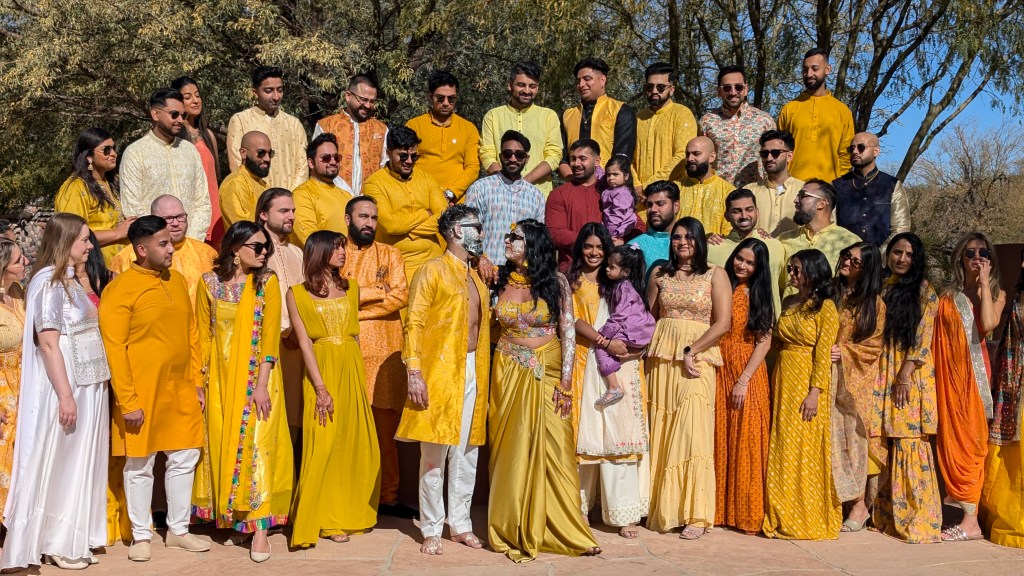
Shyam’s 27 groomsmen (yes, twenty-seven!) descended upon him like cheerful warriors. They weren’t holding back. He was slathered, dunked, completely obliterated in haldi. Archana’s turn was gentler, but she too emerged like a golden goddess. I was half-laughing, half-fascinated. Each moment sparked this question in me: Are Hindu and Muslim weddings really that different?
Spoiler: yes… and no.
One major difference? The clothes. Hindu wedding fashion is gloriously bold. Arm-baring blouses, midriff-revealing saris, stunning silks, bright colors. Growing up in a more conservative Muslim culture, I was used to long sleeves and covered silhouettes. But here, everything shimmered. It was elegant, empowering, and celebratory.
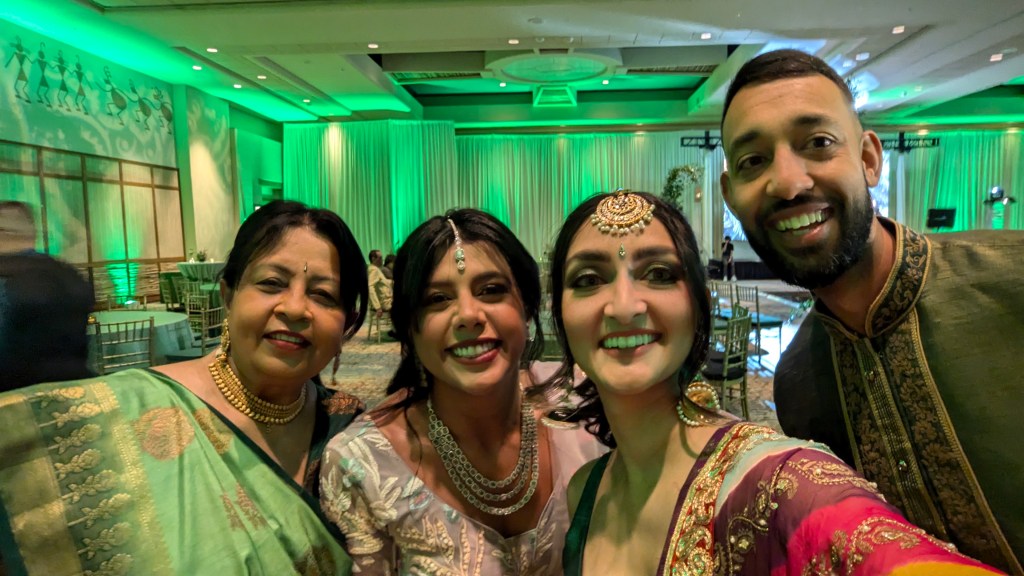
Another cultural detail I loved? The greetings. Watching young guests respectfully touch the feet of elders—pari pauna—was profoundly beautiful. It’s something even my traditionally religious mother always admired about Hinduism: the reverence for elders, embedded right into daily rituals.
Next up: the Sangeet.
Cue the music, the bangles, the dancing. This felt so familiar—like our mehendi—but with a Gujarati twist. The highlight? Raas and Garba—dances in dazzling circular motion that had the whole floor spinning like a festival of stars. I tried to keep up, laughing and dizzy, hoping not to knock anyone out with my uncoordinated joy.
So far, everything felt thrilling and vaguely familiar, like visiting a cousin’s home where everything’s similar but sprinkled with new spices.
And then came the main event.
The religious ceremony. The one I had waited a lifetime to see.
The mandap stood like a dream—regal and ornate under the open sky. We took our seats, and suddenly, I was inside the movie scenes I’d replayed a thousand times. And then it happened: the saat phere. The sacred fire. The slow, deliberate steps. The solemnity. The tied garments. It was more than I imagined—more emotional, more sacred, more real.
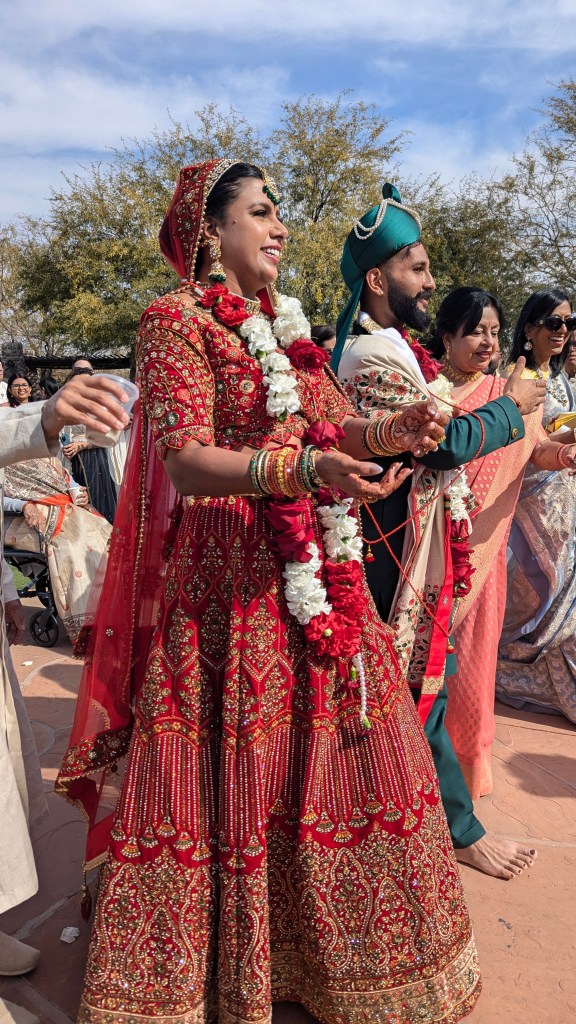
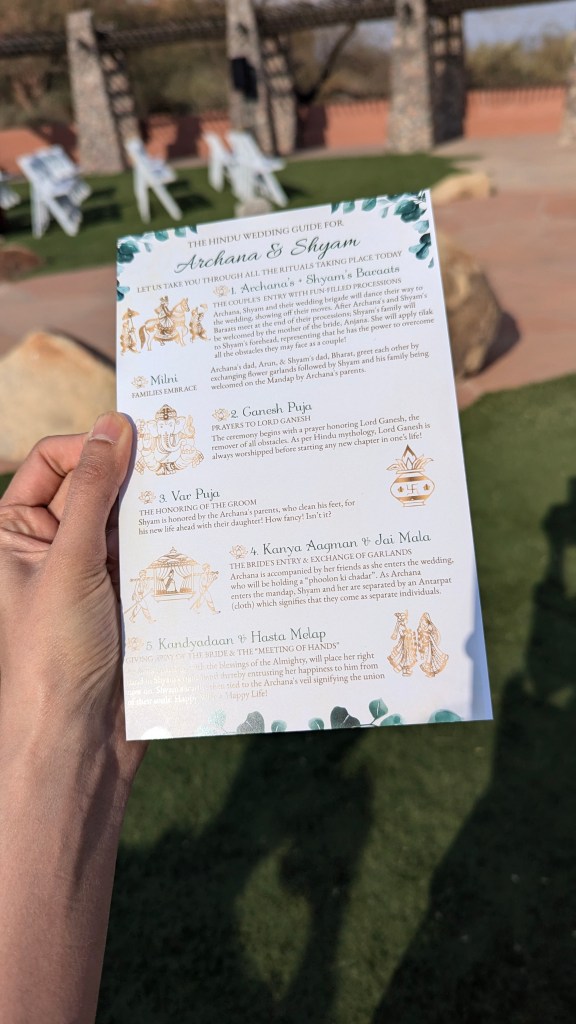
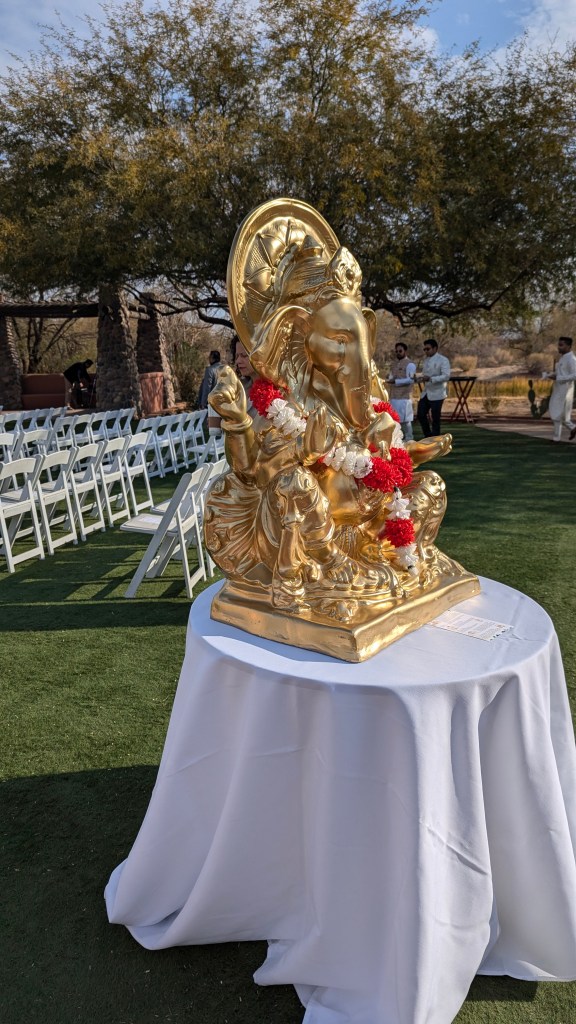
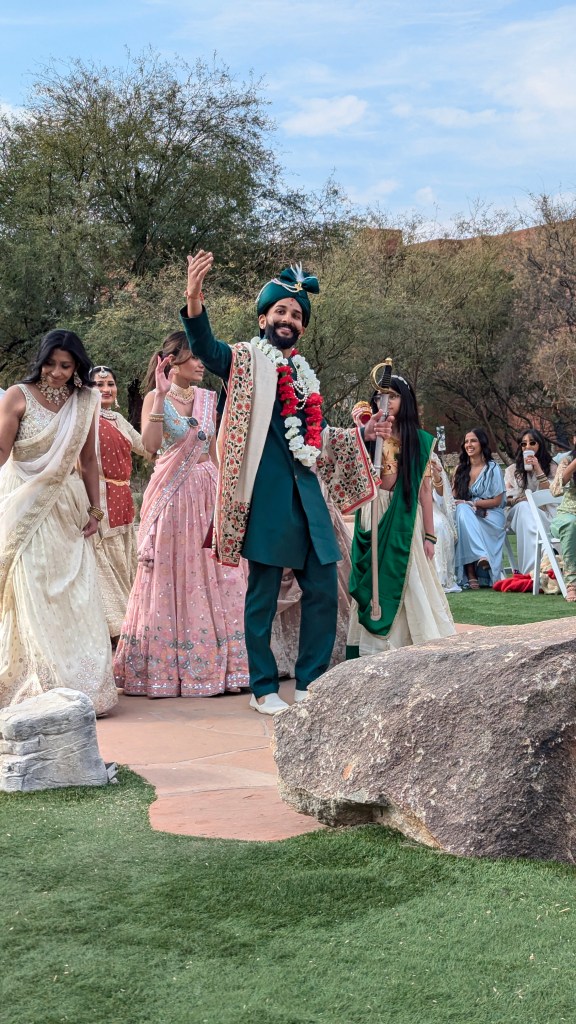

I thought about the nikkahs I had attended—beautiful in their own right, but simple. A short sermon, a signing of documents, a celebratory feast. Direct. To the point. But this Hindu ceremony? It was an odyssey. A story told in symbols, mantras, gestures, and ancient verses. Every step meant something. Every chant echoed with centuries of meaning.
It wasn’t just a wedding.
It was a cosmic promise.
And I, the eager outsider, was deeply moved.
By the end, I was full. Full of joy, full of questions, full of a profound appreciation for the richness of it all. Different faiths, different customs—but love? Celebration? Respect for tradition? Those threads run through us all.
 rehmatravels.com