
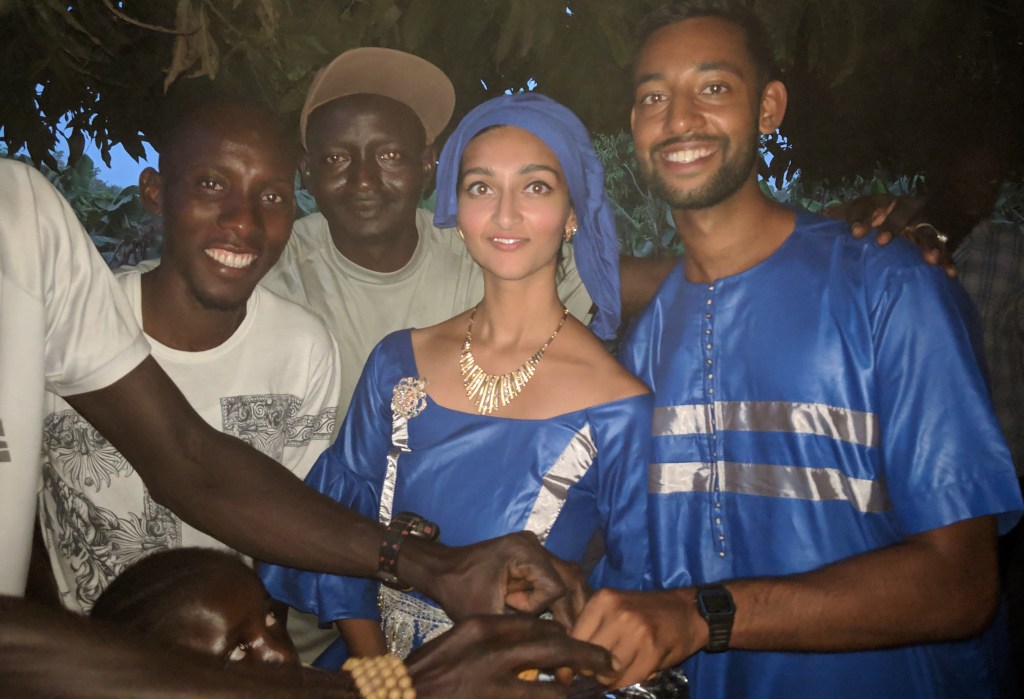
I remember the first time I laid eyes on my husband in West Africa. In a sea of beautiful, unfamiliar faces, his was the first that looked familiar—not in appearance, but in spirit. We immediately saw the similarities: the language we shared, the childhoods shaped by immigrant parents, the cultural shorthand that made everything feel a little less foreign.
Other Indians who followed Hinduism were just as delighted to find us there. Apne log in The Gambia? Of course, we had to have each other over for chai. We’d run into each other in markets—naturally, the Indian and Pakistani businessmen were everywhere—or in the most remote of villages. Two strangers might find each other at a bus stop between distant towns and instinctively recognize something shared.
When Rehan and I met in Soma, our cultural differences felt negligible. We were both American. We were both culturally Muslim. The lines between “his” country and “mine” blurred even further when I visited Pakistan in 2020—a whirlwind of weddings, family, street food, and the unfiltered laughter of children in alleyways.
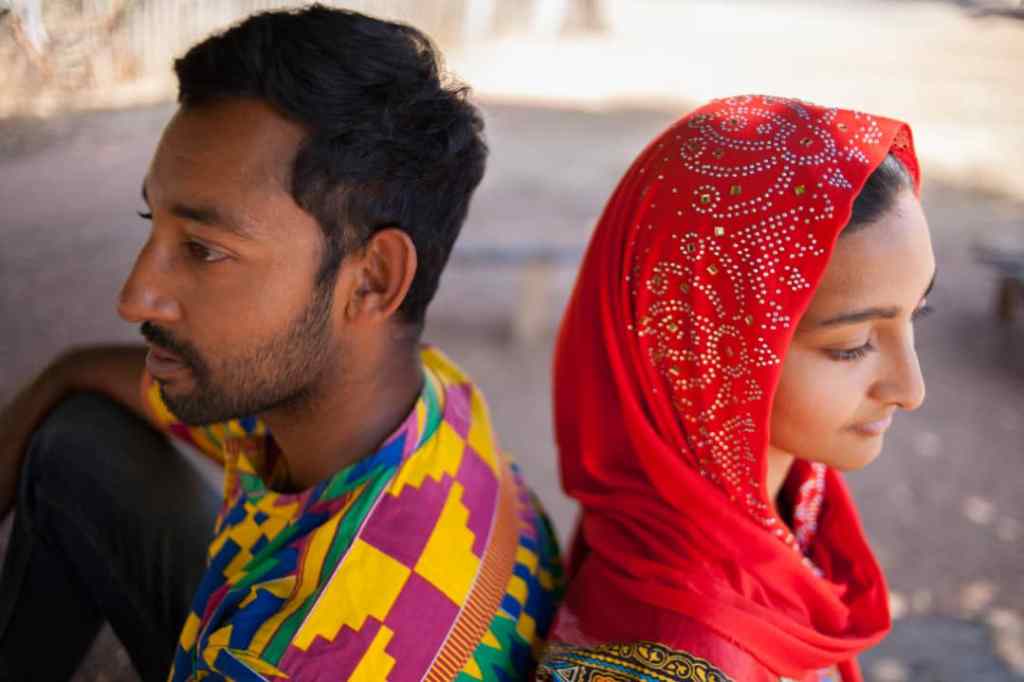
In the United States, the fact that I am Indian and he is Pakistani almost never comes up. If it does, it’s usually an American-born friend saying, “Wait—don’t your countries hate each other or something?” And yes, I’d be lying if I said love always triumphs or that politics don’t matter. Much of the acceptance we’ve found has come from the fact that we share the same religion. Had we not, our families’ reactions may have been very different.
But then there are couples like Reza and Puja—Muslim and Hindu—who show that family, commitment, and love can transcend all that noise.
Still, there’s a certain naïveté that creeps into Western desi circles.
Still, there’s a certain naïveté that creeps into Western desi circles. The way some American Hindus say caste is a relic of the past, long forgotten. But it’s not. And just like that, it’s easy to say “India-Pakistan doesn’t matter anymore” when you’re far removed from the reality. In my happy bubble, with accepting Pakistani in-laws and no pressure to choose sides, it’s tempting to believe the past doesn’t affect the present. But it does—to Hindu nationalists in the States, to politicians back home, to people who reduce love to geopolitics and cite my marriage in the same breath as Sania Mirza’s.
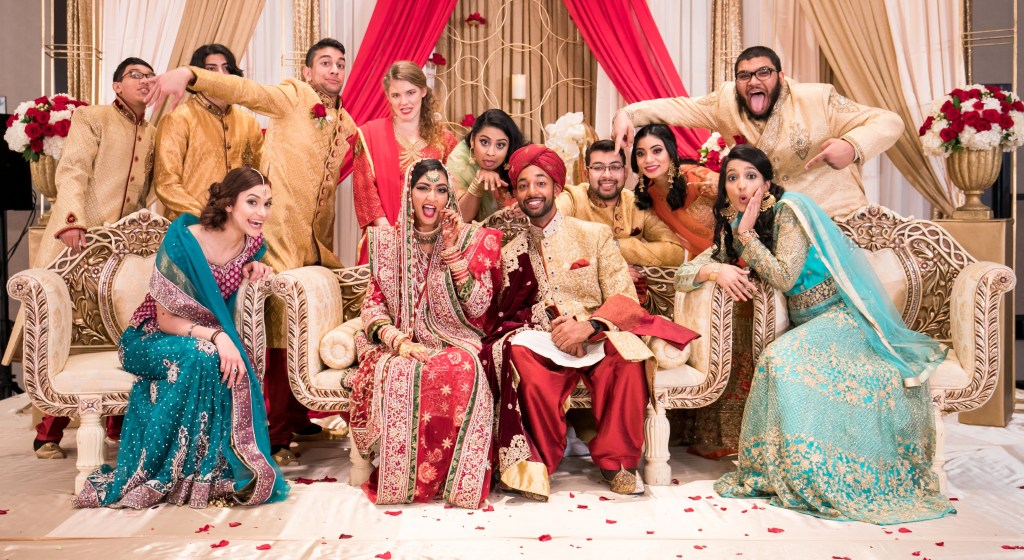
Of course, there are differences. Language, for one. My Urdu—an awkward, well-meaning hybrid of Bollywood, Hyderabadi slang, and textbook phrases—became the subject of countless jokes with my in-laws. Sometimes it stung. Most of the time, I laughed right along with them.
Then came the heartbreak of reality: when I began applying for Rehan’s Indian visa. My fingers paused over questions like “Where were his parents born?” Should I omit it? Should I pretend not to know? What if telling the truth meant we’d never make it?
And then, Pahalgam happened.
Suddenly, all Pakistani diplomats were expelled from India. Even patients seeking life-saving treatment were turned away. What hope did a Pakistani tourist have? I scoured the internet for answers, clinging to the stories of British Pakistani vloggers who jumped through bureaucratic hoops for months to get a visa. Gone was the convenience of the online process; instead, we’d need notarized documents, third-party sponsors, consulate interviews.
It’s been eight years since I last stepped foot in India. I long to return—to visit my grandfather’s grave, to eat Hyderabadi biryani under the same skies my parents grew up under, to drink sugarcane juice on hot streets and lose myself in the chaos of Charminar. But I’m not sure I feel safe going alone anymore. And more than anything, I want my husband there with me. My wonderful, Pakistani husband.
I want my husband there with me. My wonderful, Pakistani husband.
I don’t know what the future holds. Maybe one day, the politics will soften. Maybe one day, my passport and his won’t be at odds. I hope, deeply, that day comes soon—so we can stand side by side in India, not as representatives of nations in conflict, but simply as two people who found each other in a faraway corner of the world.
 rehmatravels.com